Rotomolded polyethylene boats are built by spinning marine-grade polyethylene inside a heated mold until it forms a seamless, thick-walled hull. The result is a boat that takes knocks in its stride, requires almost no upkeep, and runs efficiently on a modest outboard.
That is exactly what most people want from a first boat, or their next one. ROTO Nautica’s dayboats and catamarans are built this way for family days, fishing and coastal cruising. This guide explains how they are made and why the material makes boating simpler, more relaxed and more affordable.
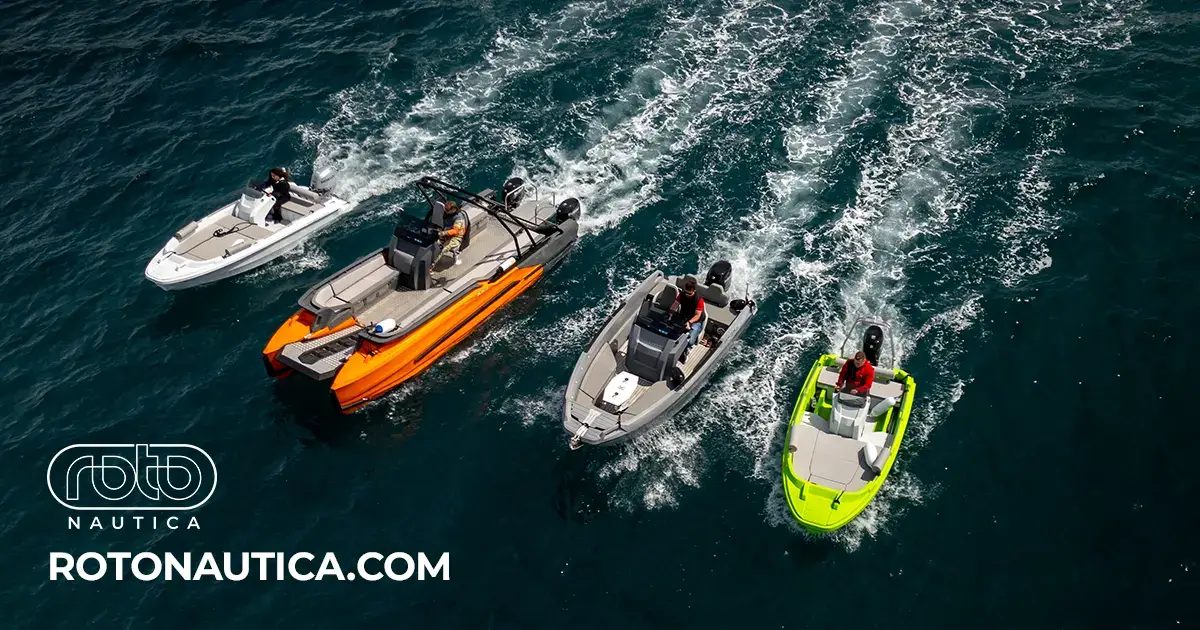
- Models: Hydra 450, Hydra 460, Hydra 530 and Korkyra 650, from 4.5 to 6.5 m.
- Material: three-layer marine-grade polyethylene with a foam core.
- Care: a freshwater rinse after use; no waxing or polishing, ever.
- Power: efficient single outboards, twin engines or fully electric.
- End of life: fully recyclable.
How rotomolded boats are made
Rotational molding (rotomolding) turns marine-grade polyethylene into a hollow, one-piece shell by heating a closed mold while it turns on two axes. There is no lamination, no resin and no seam along the keel.
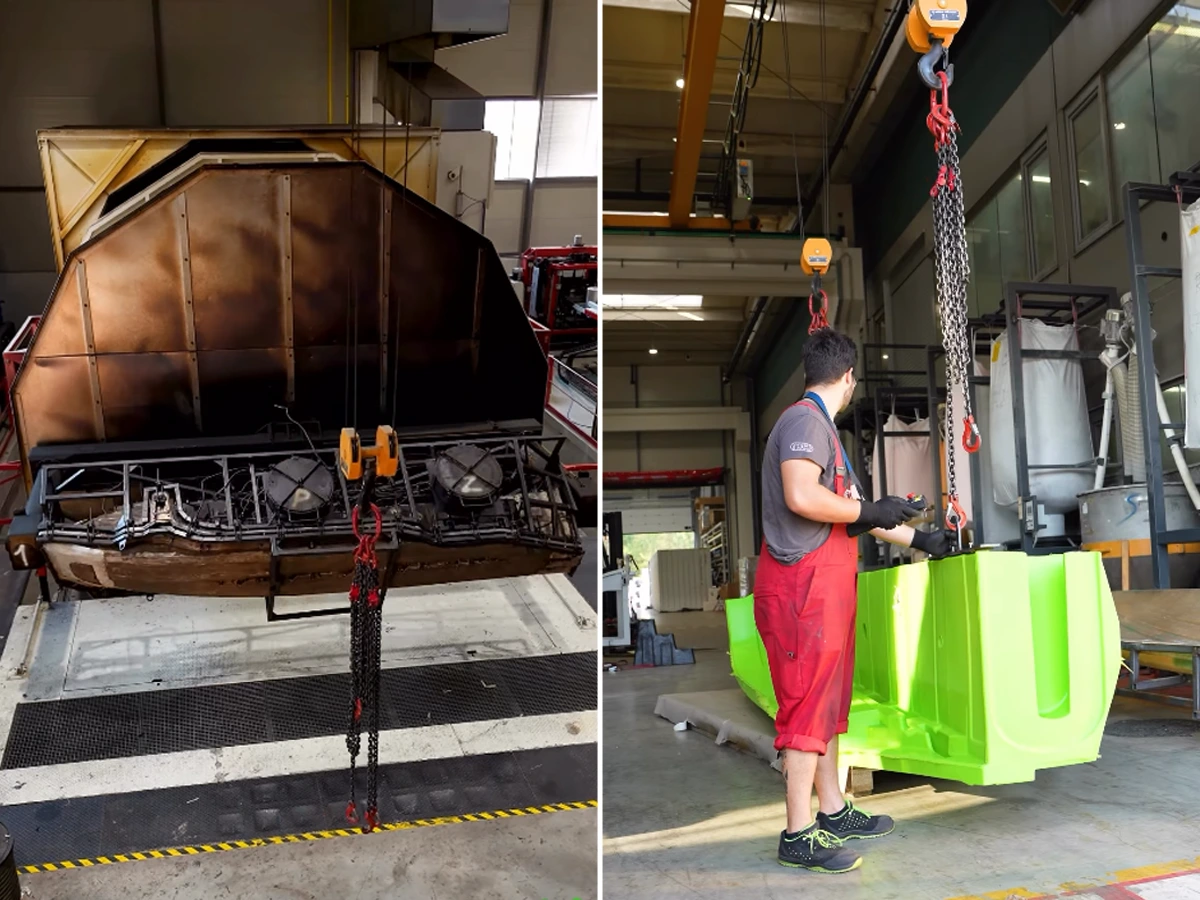
- Load the mold. A measured charge of polyethylene powder goes into a precision metal mold shaped like the hull.
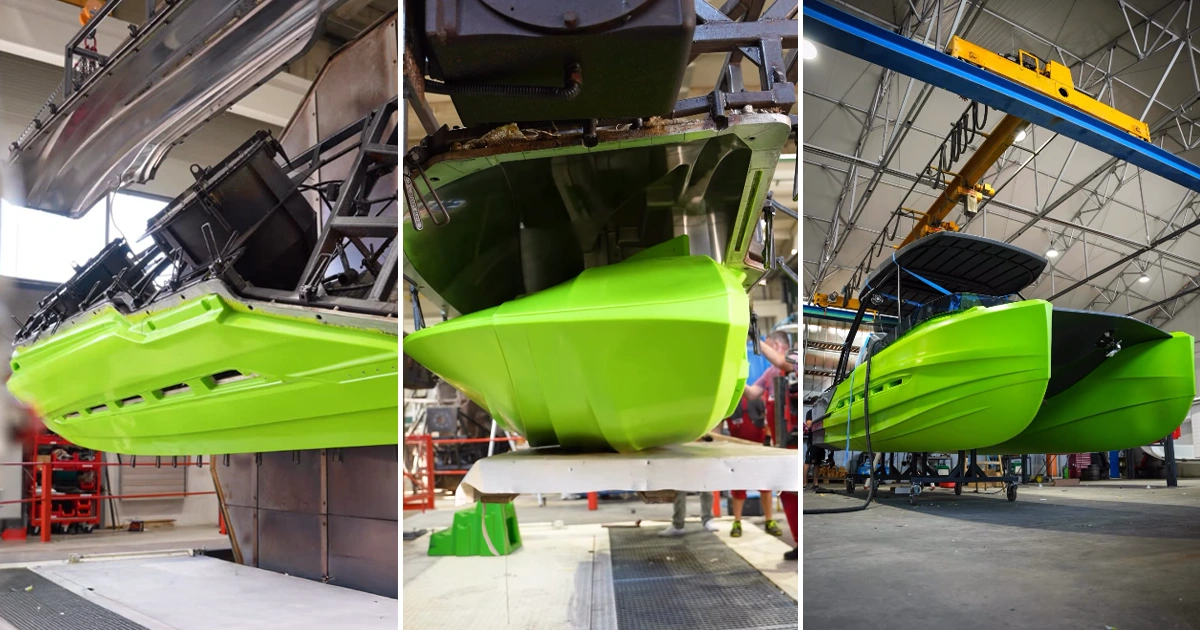
- Heat and rotate. The closed mold turns slowly on two axes inside an oven. The plastic melts and coats every inside surface, building an even wall thickness, corners and keel included.
- Cool while turning. The mold keeps rotating as it cools, so the wall sets evenly and holds its shape.
- Demold and fit out. The finished shell is trimmed and fitted with its console, seating, stainless rails, steering and hardware.
Three layers, one seamless hull
ROTO Nautica’s Hydra and Korkyra rotomolded boats are molded in three layers in a single cycle: a solid outer skin, a foamed core and a solid inner skin. The outer skin takes the knocks. The foam core stiffens the hull, insulates it and adds built-in buoyancy. The inner skin completes a strong sandwich structure, the same principle used in high-end composite boats, but in a material that won’t delaminate, blister or corrode.
Proven far beyond boating
Rotational molding dates to 19th-century Britain, where it was used to make artillery shells with perfectly even walls. Today it builds products that have to survive hard use, from fuel tanks to tractor parts. ROTO brings more than 50 years of rotomolding experience from those industries to its rotomolded boats, including a 6.5 m powered catamaran rated for up to 140 hp.
Why marine-grade polyethylene
High-density polyethylene is the material of choice for plastic hulls because it stands up to impact, corrosion and sunlight in a marine environment. ROTO Nautica’s polyethylene is UV-stable, resists both low and high temperatures, and is completely recyclable after use.
- Impact-resistant: it flexes and springs back instead of cracking.
- UV-stable: color and strength last season after season in the sun.
- Temperature-resistant: from frosty winter storage to the height of summer.
- Corrosion-proof: no rust, no electrolysis, no osmosis.
- Color molded through: a scratch reveals the same color underneath, not a different layer.
- Recyclable: the hull can be shredded and reprocessed at the end of its life.
6 reasons rotomolded boats are the smarter choice
- It shrugs off the knocks that crack fiberglass.
Is polyethylene tough enough? Absolutely. Bump the dock, misjudge the ramp or pull up onto a pebble beach, and a rotomolded hull simply flexes and springs back. A fiberglass gelcoat would chip or star-crack; a thin aluminum hull would dent. Polyethylene hulls are so impact-resistant that, in normal recreational use, they are close to indestructible. For a new skipper, that means learning without the fear of an expensive mistake. - Maintenance takes minutes, not weekends.
There is no gelcoat to wax, polish or repair. The color runs right through the material, so everyday scuffs are just part of a boat that gets used. Polyethylene cannot suffer osmotic blistering like fiberglass or galvanic corrosion like aluminum. After a trip you rinse off the salt and you are ready for the next one. A scrub brush and soapy water is all the cleaning kit you will ever need. - You don’t need a big engine.
Three-layer polyethylene hulls are light for their size, so they get on the plane without much power. The 4.6 m Hydra 460 weighs about 320 kg and is rated for up to 60 hp. A smaller outboard means a lower purchase price, less fuel and cheaper servicing, every season. - Stable, buoyant and confidence-inspiring.
Wide, molded hull forms and foam-cored walls give the Hydra models excellent stability and built-in buoyancy. The Korkyra 650 takes it further with twin catamaran hulls, a stable platform for up to 10 people. Steady boats mean relaxed passengers, easier swimming stops and calmer first trips. - One boat does almost everything.
The same hull takes the family out for a swim and a picnic, heads off for a morning’s fishing, or cruises the coast for the day. Rental operators choose polyethylene boats for their low-maintenance fleets, and rescue, police and military units rely on rotomolded boats as workboats. If it is good enough for daily professional use, it will handle your weekends with ease. - Recyclable at the end of its life.
Polyethylene is a thermoplastic, so an old hull can be shredded and reprocessed into new products. Fiberglass recycling, by contrast, remains largely unsolved outside a few pilot schemes. Choosing polyethylene means choosing rotomolded boats that don’t end up in landfills.
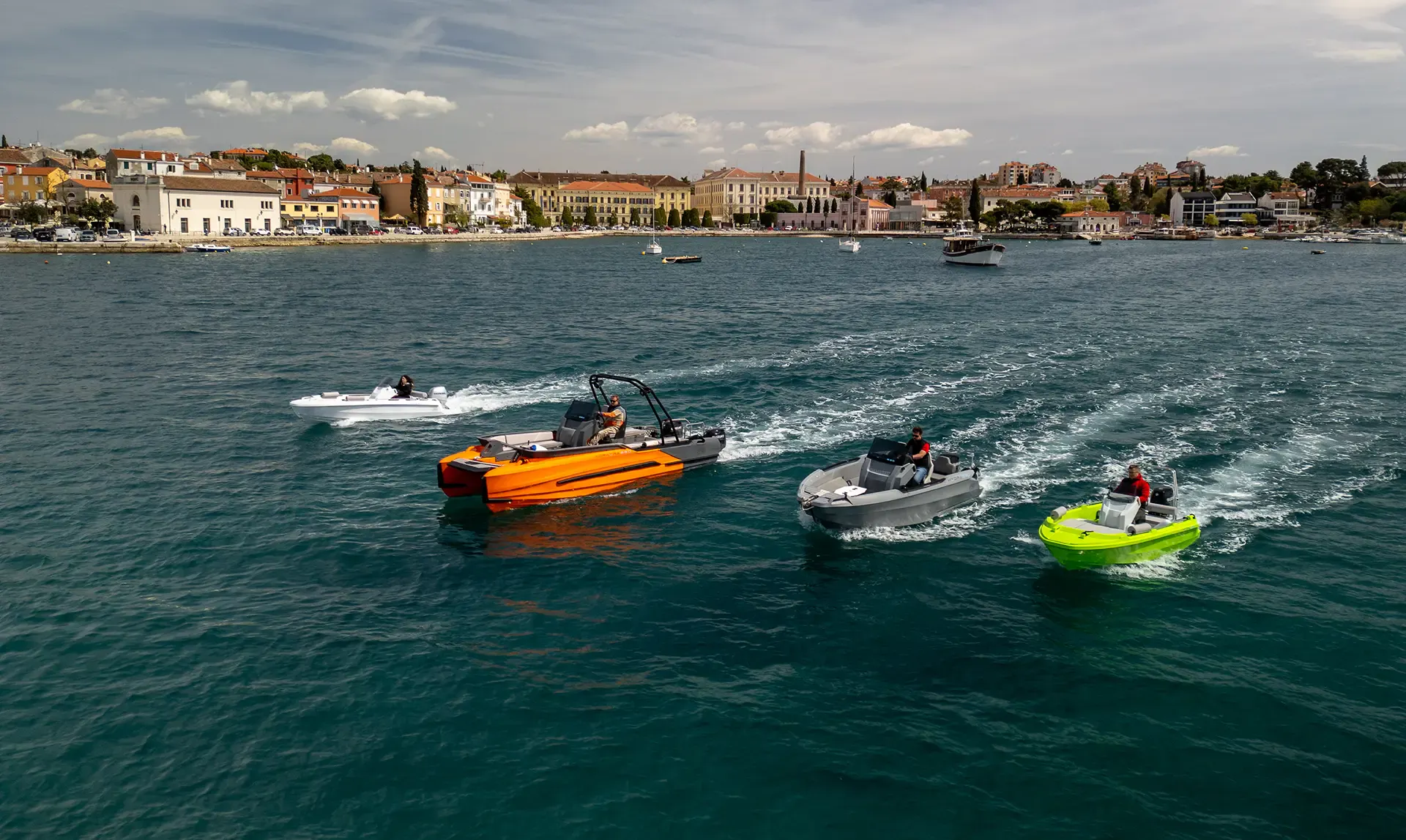
Polyethylene vs fiberglass vs aluminum
For a boat that gets used, bumped, beached and trailered, rotomolded polyethylene beats the traditional materials on the things owners care about most: toughness, upkeep, running costs and sustainability.
| Rotomolded polyethylene | Fiberglass | Aluminum | |
|---|---|---|---|
| Impact resistance | Flexes and springs back | Gelcoat chips and cracks | Dents; seams and rivets can weep |
| Routine upkeep | Rinse with fresh water | Wax, polish, gelcoat repairs | Check rivets and welds, watch for corrosion |
| Long-term risks | None of the classic ones | Osmotic blistering | Galvanic corrosion in salt water |
| Hull construction | One-piece, seamless, three-layer | Glass-and-resin laminate | Riveted or welded panels |
| Scratches | Same color underneath | Expose the laminate | Expose bare metal |
| End of life | Fully recyclable | Hard to recycle | Recyclable |
Living with a polyethylene boat
How much maintenance?
Less than you’d expect. A simple routine covers almost everything:
- After every trip: rinse the hull, deck and trailer with fresh water, flush the outboard, and open hatches so lockers dry out.
- Every month or so: check that screws, cleats, rails and steering fittings are tight, and look over the hull for deep gouges.
- End of season: wash with mild soap and a soft brush, check drain plugs and buoyancy compartments, and have the engine serviced.
- In storage: keep the boat covered or in shade, on trailer bunks or supports that spread the load along the hull.
What about bumps and scrapes?
They are part of boating, and a polyethylene hull takes them in its stride. Because the color is molded right through, everyday marks never reveal a different layer underneath, and there is no gelcoat to fill, sand and refinish. Should a hull ever need attention after a serious impact, polyethylene can be heat-welded with matching material for a strong, watertight repair, and your local ROTO Nautica dealer can take care of it for you.
Do I need a big engine?
No. Light, efficient hulls get going on modest horsepower, which means a smaller engine, less fuel and lower running costs. Always stay within the maximum power and load on the boat’s capacity plate, and for most owners an engine in the middle of the rated range gives the best balance of performance and economy. As examples, the Hydra 460 is rated to 60 hp, the Hydra 530 was tested with a 90 hp outboard, and the Korkyra 650 takes up to 140 hp, twin 60 hp engines or a 40 kW electric drive.
What can I do with it?
Pretty much anything a small boat is used for:
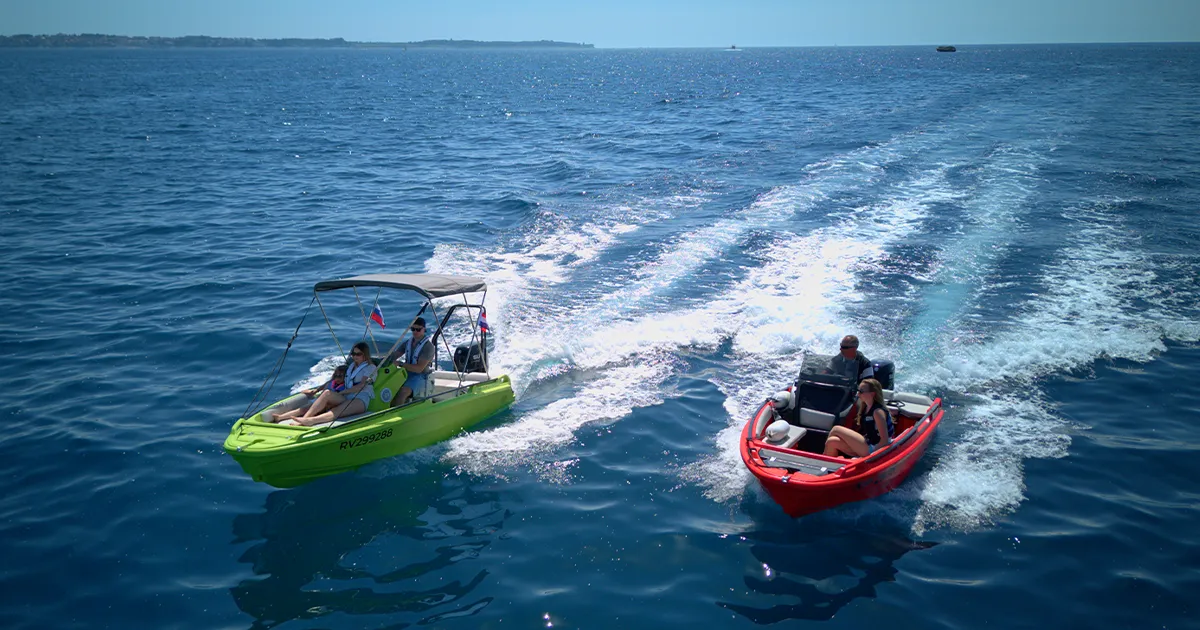
- Swimming, picnics and beach days with the family.
- Inshore and lake fishing, with room to fit rod holders and a fish finder.
- Day cruising along the coast, within the boat’s design category.
- Rental and club fleets, where low upkeep keeps boats on the water.
- Workboat roles: marinas, aquaculture, survey, safety and rescue.
- Tender duty for a larger yacht.
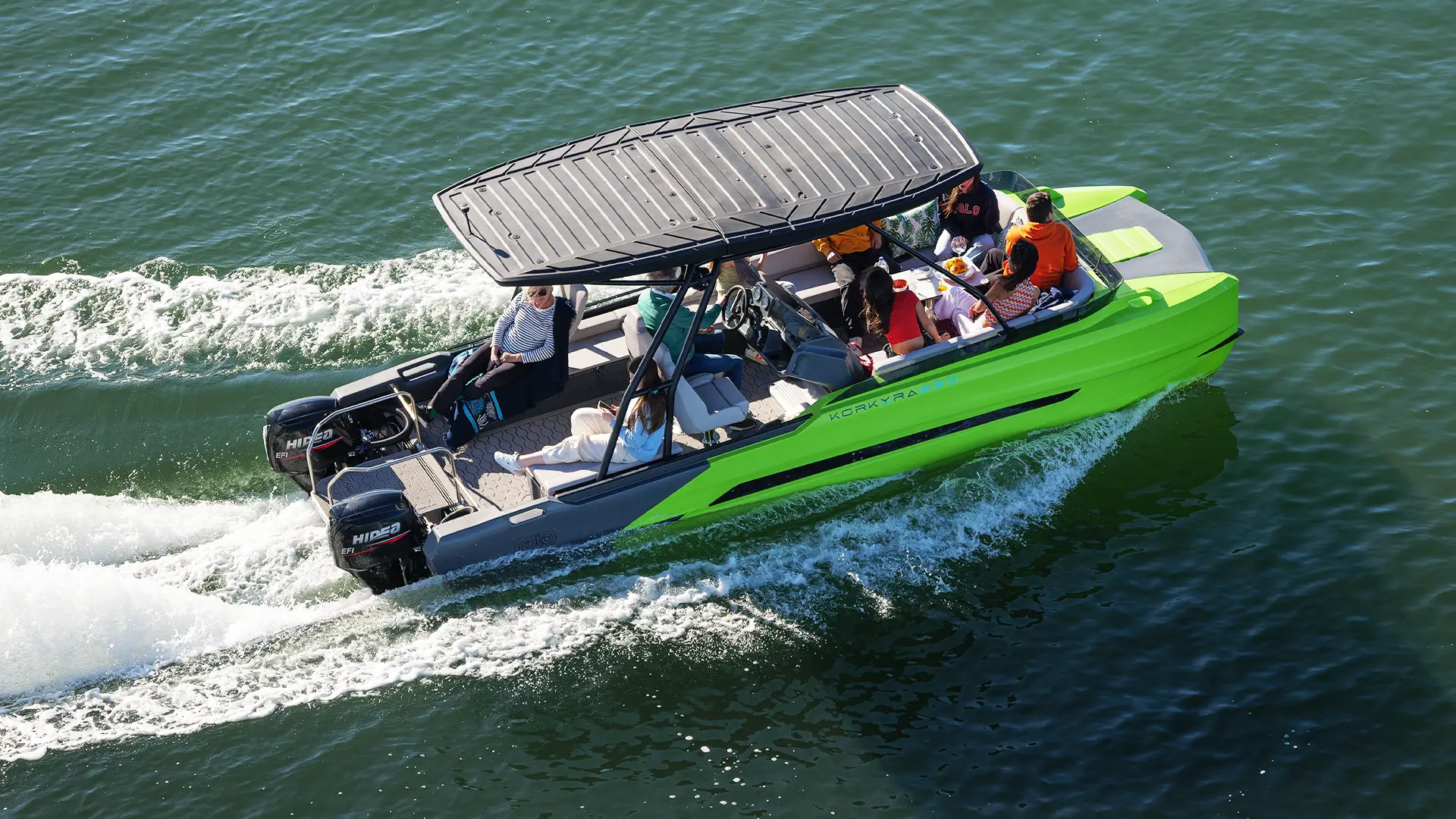
What to look for in a polyethylene boat
Quality rotomolded boats are defined by how they are built, what they are certified for, and who stands behind them. Here is what to check, and how the Hydra and Korkyra range measures up.
| What to check | Why it matters | ROTO Nautica boats |
|---|---|---|
| Wall construction | Multi-layer walls are stiffer and more buoyant | Three-layer polyethylene with a foam core |
| CE design category | Tells you which waters the boat is built for | C (coastal) and D (sheltered waters) on the Hydra 530 and Korkyra 650 |
| Engine options | Flexibility now and later | Single outboards, twin engines, or electric on the Korkyra 650 |
| Built-in buoyancy | Peace of mind for you and your passengers | Foam core in the hull walls |
| UV and temperature resistance | Long life through summers and winters | UV-stable; resists low and high temperatures |
| Dealer support | Advice, servicing and parts close to home | Local dealers across 20+ countries |
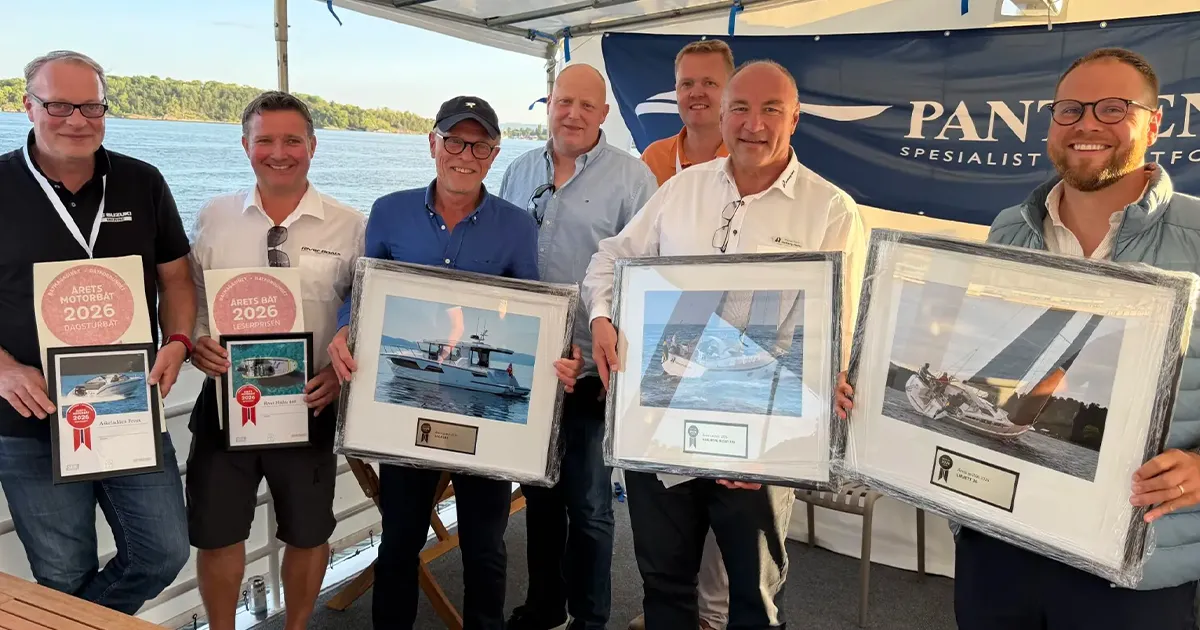
| Independent recognition | Proof from outside the brochure | Awards for excellence, readers’ choice and a Best of Boats 2025 nomination |
ROTO Nautica rotomolded boats at a glance
ROTO Nautica builds its rotomolded boats in Slovenia from three-layer rotomolded polyethylene, as part of the ROTO Group, which has worked with polymers for more than 75 years.
A rotomolded polyethylene boat gives you a tough, low-maintenance hull that is efficient to run, inexpensive to keep and recyclable at the end of its life. It takes away the things that make new owners nervous, from the first bump against the dock to the first winter, and leaves you with what boating should be: time on the water.
You’re never far from help, either. ROTO Nautica has local dealers across 20+ countries, so there is a real person nearby for advice, servicing and parts, before and long after you buy.
Frequently asked questions
-
Are rotomolded polyethylene boats any good?
Yes. They are among the most impact-resistant and lowest-maintenance boats you can buy, which is why rental fleets, rescue services and first-time owners all choose them. Today the material builds full-size powered dayboats and catamarans like the Hydra and Korkyra range.
-
Is polyethylene better than fiberglass?
For a boat that gets used, bumped, beached and trailered, yes. Polyethylene resists impact better, needs no waxing or polishing, cannot suffer osmotic blistering, and is fully recyclable at the end of its life.
-
How long do rotomolded polyethylene boats last?
With a UV-stabilized material and sensible storage, a poly hull can outlast the engines you hang on it. It has no gelcoat to wear through, no osmosis and no corrosion; the main enemy is years of unprotected sun.
-
Can rotomolded polyethylene boats be repaired?
It rarely needs to be: everyday bumps and scrapes are cosmetic. After a serious impact, polyethylene is heat-welded with matching material, and your local dealer can handle it.
-
Are rotomolded boats heavy?
No. Three-layer powered hulls are light for their size: the 4.6 m Hydra 460 weighs about 320 kg, and the 6.5 m Korkyra 650 catamaran about 820 kg without engine. That makes them easy to tow and efficient to run.
-
Can I use a polyethylene boat in salt water?
Yes. Polyethylene does not corrode. Rinse the hull, fittings, trailer and outboard with fresh water after each trip.
-
Do rotomolded boats need antifouling?
Boats kept on a trailer usually don’t. For boats left in the water, polyethylene can be painted, but it needs special surface preparation such as flame treatment first.
-
Are rotomolded polyethylene boats recyclable?
Yes. At the end of its life a poly hull can be shredded and reprocessed, which most fiberglass hulls cannot.
-
How big can a polyethylene boat be?
Big enough for real family boating. ROTO Nautica’s range runs from the 4.5 m Hydra 450 to the 6.5 m Korkyra 650 catamaran, which carries up to 10 people.
-
Do I need a big engine for rotomolded polyethylene boats?
No. Light, efficient hulls run well on modest horsepower, which keeps engine, fuel and servicing costs down. Stay within the boat’s rated maximum.